
How Stainless Steel Reactor Works in Industrial and Laboratory Applications
2026-08-07
How Stainless Steel Reactor Works in Industrial and Laboratory Applications
Reactors serve as the backbone of chemical synthesis and industrial production, finding extensive use across petroleum refining, chemical manufacturing, rubber processing, pharmaceuticals, dye production, and food processing. These pressurised vessels enable critical operations such as vulcanisation, nitration, hydrogenation, alkylation, polymerisation, and condensation reactions. Common configurations include reaction kettles, decomposition vessels, and polymerisation autoclaves. Manufacturers construct these units from a variety of materials—carbon-manganese steel, stainless steel, zirconium, nickel-based alloys (including Hastelloy, Monel, and Inconel), and composite materials—each selected to match specific process requirements. The efficiency and operational safety of these vessels depend on four essential design elements.
Structural Material – Corrosion and Pressure Resistance
Stainless steel reactors, typically fabricated from SS304 or SS316L grades, leverage superior material composition and ductility to deliver exceptional corrosion resistance against acids, alkalis, and organic solvents. These vessels also provide the mechanical strength required to withstand high temperatures and pressures. This robust construction accommodates a broad spectrum of reactions—including polymerisation, esterification, and nitration—while resisting deformation and oxidation to ensure long service life.
Agitation System – Efficient Mixing and Mass Transfer
A motor-driven impeller system—available in anchor, paddle, or turbine configurations—homogenises reactants and enhances both heat and mass transfer within the vessel. Proper agitation prevents the formation of localised concentration or temperature gradients, boosting overall reaction efficiency. Adjustable rotation speeds, typically ranging from 50 to 500 RPM, allow operators to accommodate fluids of varying viscosities.
Temperature and Pressure Control – Precision Operating Conditions
Jackets or internal coils circulate heating or cooling media—steam, thermal oil, or coolant—to enable rapid temperature adjustments across a wide range, from –20°C to 300°C. Pressure regulation is achieved through sensors and safety valves that maintain conditions from full vacuum up to 10 MPa. This precise control ensures that reactions proceed under optimal parameters.
Sealing System – Leak Prevention
Mechanical or magnetic seals are critical for safely handling volatile, toxic, or explosive substances, preventing leaks that could compromise operator safety or product quality.
Typical Workflow
The standard operating sequence involves loading materials into the vessel, sealing it, and setting the desired parameters for temperature, pressure, and agitation speed. Temperature is regulated via the jacket while agitation ensures uniform reaction conditions. Upon completion, products are discharged and the vessel is cleaned for the next batch.
Stainless Steel vs. Alternative Reactors
When selecting a reaction vessel, the choice of material significantly impacts performance, safety, and cost. The table below compares stainless steel reactors against glass and enamel alternatives across key performance criteria:
|
Property |
Stainless Steel Reactor |
Glass Reactor |
Enamel Reactor |
|
Corrosion Resistance |
High (tolerates strong acids/alkalis) |
Moderate (avoids HF/strong alkalis) |
Moderate (avoids strong acids/impact) |
|
Pressure Tolerance |
≤10 MPa |
≤0.2 MPa |
≤0.4 MPa |
|
Temperature Range |
–20°C to 900°C |
–80°C to 250°C |
–20°C to 200°C |
|
Safety |
Explosion-proof, reliable sealing |
Fragile; requires careful handling |
Enamel damage risks corrosion |
Typical Applications
Stainless steel reactors excel in high-pressure synthesis and large-scale production, including pharmaceutical intermediates, petroleum hydrogenation, and polymer synthesis. Glass reactors are preferred for laboratory-scale research and development, as well as low-temperature reactions where visual monitoring is essential. Enamel reactors are commonly employed in dye synthesis within acidic environments and food additive production.
Optimising Stainless Steel Reactor Performance
Parameter Optimisation
To maximise performance and extend equipment life, operators should limit heating rates to no more than 5°C per minute to prevent thermal stress. The vessel should be filled to no more than 70% of capacity, leaving adequate headspace for the gas phase. For agitation, anchor impellers are recommended for viscous materials, while turbine impellers are better suited for gas-liquid reactions.
Safety Protocols
Safe operation requires gradual depressurisation after reactions—avoiding sudden valve openings. For flammable systems, nitrogen blanketing should be employed, and rupture discs along with pressure interlocks should be installed as additional safeguards. Regular inspections—monthly checks for seal and shaft wear, along with annual pressure vessel certification—are essential for maintaining safe and reliable operation.
Maintenance and Troubleshooting
For seal leaks, replace gaskets or magnetic couplings and apply high-temperature sealant as needed. Agitation issues often stem from bearing problems; inspect for lubrication adequacy and blockages, using food-grade lubricants where appropriate. Jacket scaling can be addressed by cleaning with a 5% nitric acid solution to restore heat transfer efficiency.
Conclusion
Stainless steel reactors represent the all-in-one solution for chemical manufacturing, combining corrosion resistance, high-pressure durability, and fail-safe sealing. From fine chemical synthesis to industrial-scale production, their design harmonises efficiency with operational safety. Mastery of operational protocols and diligent maintenance ensures peak performance and uninterrupted workflows. Whether applied in pharmaceuticals, petrochemicals, or advanced materials, these reactors remain the backbone of modern chemical processes—a true cornerstone of industrial innovation.
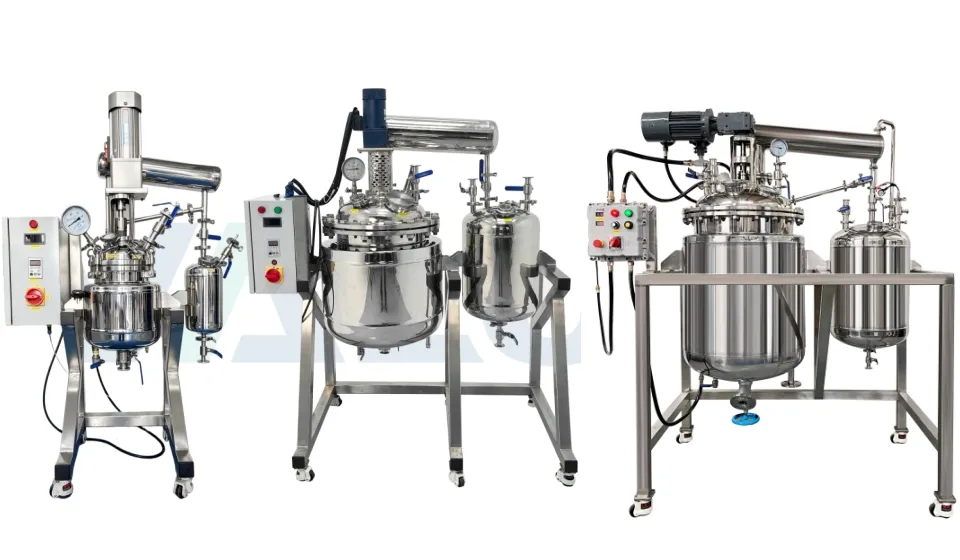
How Stainless Steel Reactor Works in Industrial and Laboratory Applications
Reactors serve as the backbone of chemical synthesis and industrial production, finding extensive use across petroleum refining, chemical manufacturing, rubber processing, pharmaceuticals, dye production, and food processing. These pressurised vessels enable critical operations such as vulcanisation, nitration, hydrogenation, alkylation, polymerisation, and condensation reactions. Common configurations include reaction kettles, decomposition vessels, and polymerisation autoclaves. Manufacturers construct these units from a variety of materials—carbon-manganese steel, stainless steel, zirconium, nickel-based alloys (including Hastelloy, Monel, and Inconel), and composite materials—each selected to match specific process requirements. The efficiency and operational safety of these vessels depend on four essential design elements.
Structural Material – Corrosion and Pressure Resistance
Stainless steel reactors, typically fabricated from SS304 or SS316L grades, leverage superior material composition and ductility to deliver exceptional corrosion resistance against acids, alkalis, and organic solvents. These vessels also provide the mechanical strength required to withstand high temperatures and pressures. This robust construction accommodates a broad spectrum of reactions—including polymerisation, esterification, and nitration—while resisting deformation and oxidation to ensure long service life.
Agitation System – Efficient Mixing and Mass Transfer
A motor-driven impeller system—available in anchor, paddle, or turbine configurations—homogenises reactants and enhances both heat and mass transfer within the vessel. Proper agitation prevents the formation of localised concentration or temperature gradients, boosting overall reaction efficiency. Adjustable rotation speeds, typically ranging from 50 to 500 RPM, allow operators to accommodate fluids of varying viscosities.
Temperature and Pressure Control – Precision Operating Conditions
Jackets or internal coils circulate heating or cooling media—steam, thermal oil, or coolant—to enable rapid temperature adjustments across a wide range, from –20°C to 300°C. Pressure regulation is achieved through sensors and safety valves that maintain conditions from full vacuum up to 10 MPa. This precise control ensures that reactions proceed under optimal parameters.
Sealing System – Leak Prevention
Mechanical or magnetic seals are critical for safely handling volatile, toxic, or explosive substances, preventing leaks that could compromise operator safety or product quality.
Typical Workflow
The standard operating sequence involves loading materials into the vessel, sealing it, and setting the desired parameters for temperature, pressure, and agitation speed. Temperature is regulated via the jacket while agitation ensures uniform reaction conditions. Upon completion, products are discharged and the vessel is cleaned for the next batch.
Stainless Steel vs. Alternative Reactors
When selecting a reaction vessel, the choice of material significantly impacts performance, safety, and cost. The table below compares stainless steel reactors against glass and enamel alternatives across key performance criteria:
|
Property |
Stainless Steel Reactor |
Glass Reactor |
Enamel Reactor |
|
Corrosion Resistance |
High (tolerates strong acids/alkalis) |
Moderate (avoids HF/strong alkalis) |
Moderate (avoids strong acids/impact) |
|
Pressure Tolerance |
≤10 MPa |
≤0.2 MPa |
≤0.4 MPa |
|
Temperature Range |
–20°C to 900°C |
–80°C to 250°C |
–20°C to 200°C |
|
Safety |
Explosion-proof, reliable sealing |
Fragile; requires careful handling |
Enamel damage risks corrosion |
Typical Applications
Stainless steel reactors excel in high-pressure synthesis and large-scale production, including pharmaceutical intermediates, petroleum hydrogenation, and polymer synthesis. Glass reactors are preferred for laboratory-scale research and development, as well as low-temperature reactions where visual monitoring is essential. Enamel reactors are commonly employed in dye synthesis within acidic environments and food additive production.
Optimising Stainless Steel Reactor Performance
Parameter Optimisation
To maximise performance and extend equipment life, operators should limit heating rates to no more than 5°C per minute to prevent thermal stress. The vessel should be filled to no more than 70% of capacity, leaving adequate headspace for the gas phase. For agitation, anchor impellers are recommended for viscous materials, while turbine impellers are better suited for gas-liquid reactions.
Safety Protocols
Safe operation requires gradual depressurisation after reactions—avoiding sudden valve openings. For flammable systems, nitrogen blanketing should be employed, and rupture discs along with pressure interlocks should be installed as additional safeguards. Regular inspections—monthly checks for seal and shaft wear, along with annual pressure vessel certification—are essential for maintaining safe and reliable operation.
Maintenance and Troubleshooting
For seal leaks, replace gaskets or magnetic couplings and apply high-temperature sealant as needed. Agitation issues often stem from bearing problems; inspect for lubrication adequacy and blockages, using food-grade lubricants where appropriate. Jacket scaling can be addressed by cleaning with a 5% nitric acid solution to restore heat transfer efficiency.
Conclusion
Stainless steel reactors represent the all-in-one solution for chemical manufacturing, combining corrosion resistance, high-pressure durability, and fail-safe sealing. From fine chemical synthesis to industrial-scale production, their design harmonises efficiency with operational safety. Mastery of operational protocols and diligent maintenance ensures peak performance and uninterrupted workflows. Whether applied in pharmaceuticals, petrochemicals, or advanced materials, these reactors remain the backbone of modern chemical processes—a true cornerstone of industrial innovation.


