
How to Choose the Right Wiped Film Molecular Distillation Equipment
2026-10-29
How to Choose the Right Wiped Film Molecular Distillation Equipment
Selecting suitable wiped film molecular distillation equipment requires careful consideration of the material properties, processing capacity, operating conditions, and long-term operating costs. Since different applications have different separation requirements, evaluating the key specifications before purchasing can help you find a system that meets your production needs.
1. How Do You Define Your Processing Requirements?
Start by identifying the materials you intend to process and the results you want to achieve. Viscosity, volatility, thermal sensitivity, and chemical compatibility can all influence equipment selection.
You should also determine the required product purity and processing volume. Laboratory experiments may require a compact system, while larger production operations need equipment capable of handling higher feed rates.
For applications in pharmaceutical or food processing, cleaning requirements, material traceability, and applicable industry standards should also be considered.
2. What Processing Capacity Do You Need?
The equipment's throughput should match your expected production volume. A system that is too small may limit production, while an oversized unit can increase initial investment and operating costs.
Consider both your current requirements and potential future demand. The appropriate capacity should be determined by the feed properties, desired separation results, and actual operating conditions rather than nominal capacity alone.
3. Why Is Vacuum System Performance Important?
A stable vacuum helps reduce the boiling temperatures of process materials, making it possible to separate certain high-boiling or heat-sensitive compounds under reduced pressure.
When comparing systems, check the achievable operating pressure, vacuum stability, pump configuration, and maintenance requirements. The required vacuum level depends on the material and process, so it is important to confirm the specifications with the supplier.
Also consider the availability of replacement parts and the ongoing costs of servicing the vacuum pump.
4. How Should You Evaluate the Wiping Mechanism?
The wiping assembly spreads the material into a thin film across the heated surface, directly affecting heat transfer and evaporation performance.
When selecting equipment, consider the wiper material, rotor speed, film distribution, and ease of cleaning. The design should suit the viscosity and chemical properties of the feedstock.
A suitable wiping mechanism helps maintain consistent film formation and reduces the risk of material buildup. For applications involving frequent product changes, removable and accessible components can also simplify cleaning and maintenance.
5. What Temperature Control Features Are Required?
Temperature control affects evaporation, separation efficiency, and product quality. The heating system must provide a suitable temperature range, while the condenser must remove heat effectively to recover the evaporated components.
Before purchasing, confirm the required operating temperature, heating method, control accuracy, and condenser configuration. Heating and cooling equipment should also be compatible with the process requirements.
The goal is to maintain suitable operating conditions without exposing sensitive materials to unnecessary heat.
6. Which Materials Are Suitable for the Equipment?
The construction materials should be compatible with the chemicals being processed and the intended operating temperature.
Stainless steel is commonly used for industrial distillation equipment, while 316L stainless steel may be preferred for certain applications requiring improved corrosion resistance. More demanding chemical environments may require other materials or specialized surface treatments.
Seals and gaskets also need to withstand the process conditions and maintain vacuum integrity. The frame, motor, and moving components should be sufficiently robust for the intended operating duty.
7. Do You Need Manual or Automated Control?
The appropriate level of automation depends on production scale and process complexity.
Manual systems may be suitable for laboratory testing and small batches. Semi-automated configurations can provide digital parameter adjustment and more repeatable operation, while PLC-based systems can integrate temperature, feed rate, rotor speed, and other controls for more complex processes.
In addition to control functions, consider whether the interface is easy to operate and whether the supplier provides operating instructions and technical training.
8. How Do You Compare the Total Cost?
The purchase price is only one part of the overall investment. Installation, utilities, energy consumption, routine maintenance, spare parts, and potential downtime should also be included when comparing quotations.
A lower initial price does not necessarily mean a lower long-term cost if the equipment requires frequent repairs or cannot meet the required production performance.
Before placing an order, clarify what is included in the quotation, such as supporting equipment, installation assistance, training, warranty coverage, and after-sales service.
9. What Should You Look for in an Equipment Supplier?
A reliable supplier should understand your application and be able to recommend a suitable configuration based on your actual requirements.
Check the supplier's experience with similar materials and processes, technical support capabilities, spare parts availability, and ability to customize the equipment when necessary.
Clear communication before purchase can help confirm the system configuration and reduce the risk of mismatched specifications.
Conclusion
Choosing wiped film molecular distillation equipment involves balancing processing capacity, vacuum performance, wiping mechanism design, temperature control, material compatibility, automation, and total ownership cost.
By defining your process requirements first and discussing them with an experienced supplier, you can select a system that fits your application and supports consistent, reliable operation.
Frequently Asked Questions
What information should I provide when requesting a quotation?
Provide details about the material, viscosity, thermal sensitivity, required processing capacity, target separation results, and expected operating conditions.
How do I determine the required vacuum level?
The appropriate pressure depends on the volatility and thermal stability of the material, along with the desired separation results. It should be confirmed through process evaluation.
Is automated control necessary?
Not always. Manual controls may be sufficient for small-scale testing, while automated systems can be useful for processes requiring repeatability, data recording, or integration with production lines.
What should be included when comparing supplier quotations?
Compare the equipment configuration, supporting systems, materials, control functions, warranty, spare parts, and technical support, rather than considering the purchase price alone.
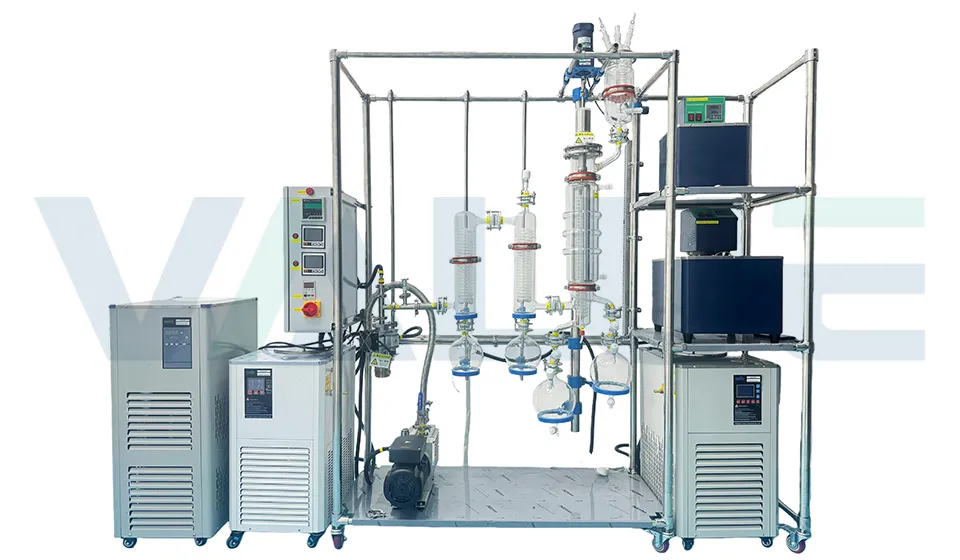
How to Choose the Right Wiped Film Molecular Distillation Equipment
Selecting suitable wiped film molecular distillation equipment requires careful consideration of the material properties, processing capacity, operating conditions, and long-term operating costs. Since different applications have different separation requirements, evaluating the key specifications before purchasing can help you find a system that meets your production needs.
1. How Do You Define Your Processing Requirements?
Start by identifying the materials you intend to process and the results you want to achieve. Viscosity, volatility, thermal sensitivity, and chemical compatibility can all influence equipment selection.
You should also determine the required product purity and processing volume. Laboratory experiments may require a compact system, while larger production operations need equipment capable of handling higher feed rates.
For applications in pharmaceutical or food processing, cleaning requirements, material traceability, and applicable industry standards should also be considered.
2. What Processing Capacity Do You Need?
The equipment's throughput should match your expected production volume. A system that is too small may limit production, while an oversized unit can increase initial investment and operating costs.
Consider both your current requirements and potential future demand. The appropriate capacity should be determined by the feed properties, desired separation results, and actual operating conditions rather than nominal capacity alone.
3. Why Is Vacuum System Performance Important?
A stable vacuum helps reduce the boiling temperatures of process materials, making it possible to separate certain high-boiling or heat-sensitive compounds under reduced pressure.
When comparing systems, check the achievable operating pressure, vacuum stability, pump configuration, and maintenance requirements. The required vacuum level depends on the material and process, so it is important to confirm the specifications with the supplier.
Also consider the availability of replacement parts and the ongoing costs of servicing the vacuum pump.
4. How Should You Evaluate the Wiping Mechanism?
The wiping assembly spreads the material into a thin film across the heated surface, directly affecting heat transfer and evaporation performance.
When selecting equipment, consider the wiper material, rotor speed, film distribution, and ease of cleaning. The design should suit the viscosity and chemical properties of the feedstock.
A suitable wiping mechanism helps maintain consistent film formation and reduces the risk of material buildup. For applications involving frequent product changes, removable and accessible components can also simplify cleaning and maintenance.
5. What Temperature Control Features Are Required?
Temperature control affects evaporation, separation efficiency, and product quality. The heating system must provide a suitable temperature range, while the condenser must remove heat effectively to recover the evaporated components.
Before purchasing, confirm the required operating temperature, heating method, control accuracy, and condenser configuration. Heating and cooling equipment should also be compatible with the process requirements.
The goal is to maintain suitable operating conditions without exposing sensitive materials to unnecessary heat.
6. Which Materials Are Suitable for the Equipment?
The construction materials should be compatible with the chemicals being processed and the intended operating temperature.
Stainless steel is commonly used for industrial distillation equipment, while 316L stainless steel may be preferred for certain applications requiring improved corrosion resistance. More demanding chemical environments may require other materials or specialized surface treatments.
Seals and gaskets also need to withstand the process conditions and maintain vacuum integrity. The frame, motor, and moving components should be sufficiently robust for the intended operating duty.
7. Do You Need Manual or Automated Control?
The appropriate level of automation depends on production scale and process complexity.
Manual systems may be suitable for laboratory testing and small batches. Semi-automated configurations can provide digital parameter adjustment and more repeatable operation, while PLC-based systems can integrate temperature, feed rate, rotor speed, and other controls for more complex processes.
In addition to control functions, consider whether the interface is easy to operate and whether the supplier provides operating instructions and technical training.
8. How Do You Compare the Total Cost?
The purchase price is only one part of the overall investment. Installation, utilities, energy consumption, routine maintenance, spare parts, and potential downtime should also be included when comparing quotations.
A lower initial price does not necessarily mean a lower long-term cost if the equipment requires frequent repairs or cannot meet the required production performance.
Before placing an order, clarify what is included in the quotation, such as supporting equipment, installation assistance, training, warranty coverage, and after-sales service.
9. What Should You Look for in an Equipment Supplier?
A reliable supplier should understand your application and be able to recommend a suitable configuration based on your actual requirements.
Check the supplier's experience with similar materials and processes, technical support capabilities, spare parts availability, and ability to customize the equipment when necessary.
Clear communication before purchase can help confirm the system configuration and reduce the risk of mismatched specifications.
Conclusion
Choosing wiped film molecular distillation equipment involves balancing processing capacity, vacuum performance, wiping mechanism design, temperature control, material compatibility, automation, and total ownership cost.
By defining your process requirements first and discussing them with an experienced supplier, you can select a system that fits your application and supports consistent, reliable operation.
Frequently Asked Questions
What information should I provide when requesting a quotation?
Provide details about the material, viscosity, thermal sensitivity, required processing capacity, target separation results, and expected operating conditions.
How do I determine the required vacuum level?
The appropriate pressure depends on the volatility and thermal stability of the material, along with the desired separation results. It should be confirmed through process evaluation.
Is automated control necessary?
Not always. Manual controls may be sufficient for small-scale testing, while automated systems can be useful for processes requiring repeatability, data recording, or integration with production lines.
What should be included when comparing supplier quotations?
Compare the equipment configuration, supporting systems, materials, control functions, warranty, spare parts, and technical support, rather than considering the purchase price alone.


