
Why Is Wiped Film Molecular Distillation Suitable for High-Viscosity Liquids?
2026-10-15
Why Is Wiped Film Molecular Distillation Suitable for High-Viscosity Liquids?
Processing high-viscosity liquids can be challenging because they flow slowly, transfer heat less effectively, and may be vulnerable to thermal degradation during prolonged heating. Wiped film molecular distillation offers a practical solution for certain difficult separation processes by combining thin-film evaporation, mechanical wiping, and vacuum operation.
Understanding how these features work together can help determine whether this technology is suitable for a particular material.
1. Why Are High-Viscosity Liquids Difficult to Distill?
Highly viscous materials do not flow as easily as low-viscosity liquids. In conventional distillation equipment, this can limit material circulation and heat transfer, making evaporation less efficient.
Longer exposure to heat can also damage temperature-sensitive compounds or change the properties of the final product. In addition, thick materials may accumulate on heated surfaces, increasing cleaning requirements and affecting operating consistency.
These challenges make equipment design and temperature management especially important when selecting a distillation method for viscous feedstocks.
2. How Does Wiped Film Technology Improve Heat Transfer?
One of the main advantages of wiped film molecular distillation is its ability to spread the feed into a thin layer across a heated surface.
A rotating wiper continuously distributes the material, increasing the contact area available for heat transfer. This helps heat reach the liquid more effectively than in systems where thick layers of material accumulate on the heating surface.
The wiper also helps move the material along the evaporation zone, supporting continuous processing and reducing the likelihood of localized overheating caused by uneven distribution.
3. Why Is Vacuum Important for Viscous Materials?
Vacuum operation reduces the pressure inside the distillation system, allowing volatile components to evaporate at lower temperatures than they would under atmospheric pressure.
This is particularly useful for materials that are sensitive to heat or require separation under carefully controlled conditions. Lower operating temperatures can help limit thermal damage, although the actual results depend on the material and process parameters.
In molecular distillation, a short distance between the evaporation and condensation surfaces also supports the transfer of vapor molecules under sufficiently high-vacuum conditions. The required vacuum level depends on the substances being separated and the intended operating temperature.
4. How Does the Rotating Wiper Help Prevent Material Buildup?
High-viscosity liquids can leave deposits on heated surfaces if they are not distributed and moved effectively. Material buildup may interfere with heat transfer and increase the need for cleaning.
The rotating wiper continuously renews the liquid film and helps move material through the evaporation zone. This can reduce prolonged contact with the heated wall and support more consistent processing.
However, the appropriate rotor design and speed should be selected according to the material's viscosity, flow characteristics, and sensitivity to mechanical forces. Not every viscous or shear-sensitive material will respond in the same way.
5. What Are the Main Benefits Compared with Conventional Distillation?
For suitable applications, wiped film molecular distillation offers several potential advantages:
- More effective heat transfer: Thin-film formation increases the surface area available for heat exchange.
- Reduced thermal exposure: Vacuum operation and controlled residence time can help limit heat-related degradation.
- Improved handling of viscous feedstocks: Mechanical wiping supports material distribution across the heated surface.
- More consistent processing: Controlled feeding, temperature, vacuum, and rotor speed can help maintain stable operating conditions.
- Flexible process adjustment: Operating parameters can be adapted to the properties of different materials.
Actual performance depends on feed composition, viscosity, volatility, equipment configuration, and operating conditions. A process evaluation is recommended before estimating throughput or separation efficiency.
6. Where Is Wiped Film Molecular Distillation Used for High-Viscosity Materials?
This technology can be considered for a range of applications involving viscous or heat-sensitive substances.
Chemical and polymer processing: It may be used for suitable purification and separation tasks involving high-boiling compounds or polymer-related materials.
Natural extracts and specialty ingredients: Certain concentrated extracts and oil-based materials can benefit from controlled evaporation under vacuum.
Food and flavor processing: Selected viscous ingredients may be processed where temperature management and product quality are important.
Other industrial separation processes: The system may also be considered for specialized feedstocks that are difficult to process using conventional distillation methods.
The suitability of the equipment must be evaluated based on the material's physical and chemical properties, required separation results, and operating conditions.
Conclusion
Wiped film molecular distillation is suitable for many high-viscosity applications because it combines continuous thin-film formation, mechanical wiping, and vacuum operation. These features can improve heat transfer, support material movement, and reduce unnecessary thermal exposure.
Before choosing a system, it is important to assess the feed viscosity, thermal sensitivity, required processing capacity, vacuum level, and target separation results. Matching the equipment configuration to these requirements is key to achieving reliable performance.
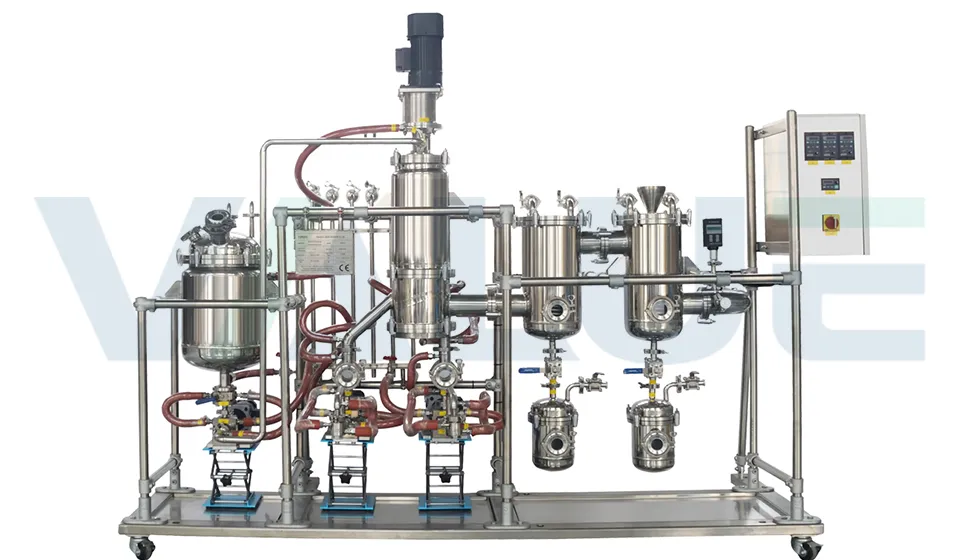
Why Is Wiped Film Molecular Distillation Suitable for High-Viscosity Liquids?
Processing high-viscosity liquids can be challenging because they flow slowly, transfer heat less effectively, and may be vulnerable to thermal degradation during prolonged heating. Wiped film molecular distillation offers a practical solution for certain difficult separation processes by combining thin-film evaporation, mechanical wiping, and vacuum operation.
Understanding how these features work together can help determine whether this technology is suitable for a particular material.
1. Why Are High-Viscosity Liquids Difficult to Distill?
Highly viscous materials do not flow as easily as low-viscosity liquids. In conventional distillation equipment, this can limit material circulation and heat transfer, making evaporation less efficient.
Longer exposure to heat can also damage temperature-sensitive compounds or change the properties of the final product. In addition, thick materials may accumulate on heated surfaces, increasing cleaning requirements and affecting operating consistency.
These challenges make equipment design and temperature management especially important when selecting a distillation method for viscous feedstocks.
2. How Does Wiped Film Technology Improve Heat Transfer?
One of the main advantages of wiped film molecular distillation is its ability to spread the feed into a thin layer across a heated surface.
A rotating wiper continuously distributes the material, increasing the contact area available for heat transfer. This helps heat reach the liquid more effectively than in systems where thick layers of material accumulate on the heating surface.
The wiper also helps move the material along the evaporation zone, supporting continuous processing and reducing the likelihood of localized overheating caused by uneven distribution.
3. Why Is Vacuum Important for Viscous Materials?
Vacuum operation reduces the pressure inside the distillation system, allowing volatile components to evaporate at lower temperatures than they would under atmospheric pressure.
This is particularly useful for materials that are sensitive to heat or require separation under carefully controlled conditions. Lower operating temperatures can help limit thermal damage, although the actual results depend on the material and process parameters.
In molecular distillation, a short distance between the evaporation and condensation surfaces also supports the transfer of vapor molecules under sufficiently high-vacuum conditions. The required vacuum level depends on the substances being separated and the intended operating temperature.
4. How Does the Rotating Wiper Help Prevent Material Buildup?
High-viscosity liquids can leave deposits on heated surfaces if they are not distributed and moved effectively. Material buildup may interfere with heat transfer and increase the need for cleaning.
The rotating wiper continuously renews the liquid film and helps move material through the evaporation zone. This can reduce prolonged contact with the heated wall and support more consistent processing.
However, the appropriate rotor design and speed should be selected according to the material's viscosity, flow characteristics, and sensitivity to mechanical forces. Not every viscous or shear-sensitive material will respond in the same way.
5. What Are the Main Benefits Compared with Conventional Distillation?
For suitable applications, wiped film molecular distillation offers several potential advantages:
- More effective heat transfer: Thin-film formation increases the surface area available for heat exchange.
- Reduced thermal exposure: Vacuum operation and controlled residence time can help limit heat-related degradation.
- Improved handling of viscous feedstocks: Mechanical wiping supports material distribution across the heated surface.
- More consistent processing: Controlled feeding, temperature, vacuum, and rotor speed can help maintain stable operating conditions.
- Flexible process adjustment: Operating parameters can be adapted to the properties of different materials.
Actual performance depends on feed composition, viscosity, volatility, equipment configuration, and operating conditions. A process evaluation is recommended before estimating throughput or separation efficiency.
6. Where Is Wiped Film Molecular Distillation Used for High-Viscosity Materials?
This technology can be considered for a range of applications involving viscous or heat-sensitive substances.
Chemical and polymer processing: It may be used for suitable purification and separation tasks involving high-boiling compounds or polymer-related materials.
Natural extracts and specialty ingredients: Certain concentrated extracts and oil-based materials can benefit from controlled evaporation under vacuum.
Food and flavor processing: Selected viscous ingredients may be processed where temperature management and product quality are important.
Other industrial separation processes: The system may also be considered for specialized feedstocks that are difficult to process using conventional distillation methods.
The suitability of the equipment must be evaluated based on the material's physical and chemical properties, required separation results, and operating conditions.
Conclusion
Wiped film molecular distillation is suitable for many high-viscosity applications because it combines continuous thin-film formation, mechanical wiping, and vacuum operation. These features can improve heat transfer, support material movement, and reduce unnecessary thermal exposure.
Before choosing a system, it is important to assess the feed viscosity, thermal sensitivity, required processing capacity, vacuum level, and target separation results. Matching the equipment configuration to these requirements is key to achieving reliable performance.


