
Fractional Distillation Equipment in Flavors & Fragrance Applications
2026-05-22
Introduction
The global flavor and fragrance industry is experiencing robust growth, with the market projected to reach USD 63.97 billion by 2034 from USD 40.68 billion in 2025, registering a compound annual growth rate (CAGR) of 5.16%. Within this thriving sector, the demand for natural flavors and fragrances is particularly strong, with the natural segment expected to grow at a CAGR of 6.4% from 2026 to 2033.
As consumers increasingly seek clean-label, plant-based, and naturally sourced ingredients, the pressure on flavor and fragrance manufacturers to deliver high-purity, authentic aroma compounds has never been greater. This is where fractional distillation equipment emerges as an indispensable technology. Distillation technology already holds the largest revenue share among natural flavor and fragrance production methods, accounting for 42.0% of the market in 2025, due to its cost efficiency, scalability, and proven effectiveness in producing high-purity essential oils.
In this article, we explore how fractional distillation equipment powers the separation and purification of aroma compounds, examine the key technologies available, and look ahead at emerging trends shaping the industry.
Why Fractional Distillation Equipment Is Critical for Flavors & Fragrances
The heart of flavor and fragrance production lies in isolating valuable aroma compounds from complex botanical mixtures. Most fragrance components—terpenes, sesquiterpenes, oxygenated monoterpenes, and other volatile organic compounds—are highly heat-sensitive. Conventional distillation methods often subject these delicate molecules to thermal stress, leading to degradation, oxidation, or unwanted side reactions that compromise the authentic scent profile.
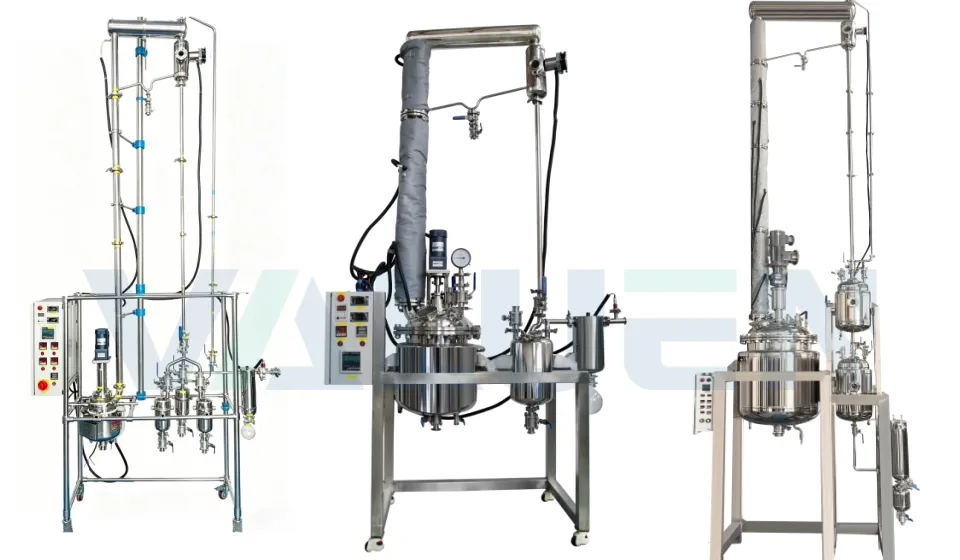
Fractional distillation equipment overcomes this challenge by leveraging differences in component boiling points to achieve separation through multiple theoretical stages within a single column. Vapors of lighter components rise through the fractionating column and condense at the top, while heavier components flow back into the vessel. By increasing the number of theoretical stages, fractional distillation equipment achieves far greater separation efficiency than simple distillation methods, enabling manufacturers to isolate target compounds with exceptional purity while preserving their natural character.
Real-World Applications of Fractional Distillation Equipment
Patchouli Oil Fractionation
Patchouli oil is one of the most valuable essential oils in perfumery, widely used as a binding agent for perfume constituents. Its distinct woody, earthy, and long-lasting odor profile makes it irreplaceable by synthetic substitutes. The key fragrance component in patchouli oil is α-guaiene, a sesquiterpene compound used as a primary flavor and fragrance agent.
Researchers have successfully isolated α-guaiene-enriched fractions from crude patchouli oil using vacuum fractional distillation equipment. Through optimization of feed volume, reflux ratio (from 10:1 to 30:1), and applied run pressure (5–15 mmHg), the optimum conditions yielded an α-guaiene fraction at 44.70% purity. The reflux ratio and applied run pressure were found to have significant effects on the separation outcome, demonstrating how precise control of fractional distillation equipment parameters directly impacts product quality.
Tea Tree Oil Terpinen-4-ol Enrichment
Tea tree oil (Melaleuca alternifolia) is widely used for its antimicrobial properties, with terpinen-4-ol being its primary active and aroma-contributing component. Vacuum fractional distillation equipment has been systematically studied to enrich terpinen-4-ol content from raw tea tree oil.
The separation performance depends heavily on the type of column, packing materials, and column height in the fractional distillation equipment. The best results were achieved using a 300 mm Hempel column filled with small Fenske helices (10 mm × 2 mm inner diameter) at a system pressure of 60 mmHg. GC/MS analysis showed an almost 2.5-fold increase in terpinen-4-ol content, from 39.23% to 95.77% after fractionation, with 75% successfully recovered from the parental oil.
This case demonstrates how fractional distillation equipment specifications—including column type, packing selection, and column height—must be carefully matched to the target compound's properties.
Citronella Oil Citronellal and Geraniol Isolation
Citronella oil (Cymbopogon winterianus) contains two valuable fragrance compounds: citronellal and geraniol. Both are important ingredients in perfumery, cosmetics, and household products. Using fractional distillation equipment, researchers successfully separated these components to improve their market value.
The investigation examined the effects of system pressure, packing types, and column height. Results showed that higher system pressure improved separation while increasing distillation time. Packing types enhanced separation by providing greater surface area for vapor-liquid contact. In the optimal citronella oil fractionation using fractional distillation equipment, citronellal content increased 2.5-fold from 37.68% to 94.33%, while geraniol purity reached 40.61% from an initial content of 17.33%. The fractional distillation equipment recovered up to 90.00% of citronellal and 68.18% of geraniol.
Key Components of Fractional Distillation Equipment
Packing Materials
The packing material inside the fractional column is a critical component that determines separation efficiency. Common packing options for fractional distillation equipment include:
Structured packing (e.g., Mellapak™) : Provides uniform flow patterns and maximizes interfacial area between vapor and liquid phases. Structured packing in fractional distillation equipment achieves theoretical plate efficiencies approaching 90–95%.
Random packing (Structural packing, θring, Raschig rings, Pall rings) : Offers cost-effective solutions for less demanding separations, achieving theoretical plate efficiencies of 70–80%. In one study, small metal helixes measuring 2 mm × 10 mm were found to be particularly effective for cineole enrichment in fractional distillation equipment.
Hempel columns : Often preferred for essential oil fractionation applications due to their favorable packing characteristics.
Column Height and Theoretical Plates
The number of theoretical plates in fractional distillation equipment directly influences separation resolution. For essential oil fractionation, column heights ranging from 300 mm to 600 mm are commonly employed, with taller columns generally improving separation at the expense of longer processing times.
Temperature Control Systems
Precise temperature control is non-negotiable in flavor and fragrance fractional distillation equipment. Modern systems incorporate distributed sensing networks and programmable temperature profiles to maintain optimal conditions throughout the column height, enabling separation of components with boiling point differences as small as 2–5°C.
Vacuum Systems
Given the heat sensitivity of most aroma compounds, vacuum capability is a defining feature of high-performance fractional distillation equipment. Operating pressures down to 0.5 mbar absolute are common, with advanced systems reaching 0.001 mbar or lower for molecular distillation applications.
Conclusion
Fractional distillation equipment lies at the very heart of modern flavor and fragrance production. From enriching the precious sesquiterpenes in patchouli oil to isolating the crisp, clean notes of citronellal from citronella, from concentrating the therapeutic terpinen-4-ol in tea tree oil to purifying the delicate oxygenated monoterpenes of lavender—fractional distillation equipment transforms complex botanical mixtures into the pure, authentic aroma compounds that define the world's most beloved fragrances and flavors.
As the global natural flavors and fragrances market continues its strong growth trajectory—expected to reach nearly USD 20 billion by 2033—the role of advanced fractional distillation equipment will only become more central. Manufacturers who invest in the right fractional distillation equipment configuration—whether vacuum fractional distillation, short path distillation, or hybrid wiped-film systems—will be positioned to meet rising consumer expectations for clean-label, naturally sourced sensory experiences.
Whether you are a researcher handling precious microliter samples of a rare botanical oil or a production manager overseeing ton-scale processing of essential oils, fractional distillation equipment offers the precision, flexibility, and gentle handling required to preserve the authentic character of nature's most aromatic gifts. With continued advances in automation, energy efficiency, and modular design, fractional distillation equipment will remain the technology of choice for flavor and fragrance manufacturers seeking to unlock the full potential of natural aroma compounds—without compromise.
Introduction
The global flavor and fragrance industry is experiencing robust growth, with the market projected to reach USD 63.97 billion by 2034 from USD 40.68 billion in 2025, registering a compound annual growth rate (CAGR) of 5.16%. Within this thriving sector, the demand for natural flavors and fragrances is particularly strong, with the natural segment expected to grow at a CAGR of 6.4% from 2026 to 2033.
As consumers increasingly seek clean-label, plant-based, and naturally sourced ingredients, the pressure on flavor and fragrance manufacturers to deliver high-purity, authentic aroma compounds has never been greater. This is where fractional distillation equipment emerges as an indispensable technology. Distillation technology already holds the largest revenue share among natural flavor and fragrance production methods, accounting for 42.0% of the market in 2025, due to its cost efficiency, scalability, and proven effectiveness in producing high-purity essential oils.
In this article, we explore how fractional distillation equipment powers the separation and purification of aroma compounds, examine the key technologies available, and look ahead at emerging trends shaping the industry.
Why Fractional Distillation Equipment Is Critical for Flavors & Fragrances
The heart of flavor and fragrance production lies in isolating valuable aroma compounds from complex botanical mixtures. Most fragrance components—terpenes, sesquiterpenes, oxygenated monoterpenes, and other volatile organic compounds—are highly heat-sensitive. Conventional distillation methods often subject these delicate molecules to thermal stress, leading to degradation, oxidation, or unwanted side reactions that compromise the authentic scent profile.
Fractional distillation equipment overcomes this challenge by leveraging differences in component boiling points to achieve separation through multiple theoretical stages within a single column. Vapors of lighter components rise through the fractionating column and condense at the top, while heavier components flow back into the vessel. By increasing the number of theoretical stages, fractional distillation equipment achieves far greater separation efficiency than simple distillation methods, enabling manufacturers to isolate target compounds with exceptional purity while preserving their natural character.
Real-World Applications of Fractional Distillation Equipment
Patchouli Oil Fractionation
Patchouli oil is one of the most valuable essential oils in perfumery, widely used as a binding agent for perfume constituents. Its distinct woody, earthy, and long-lasting odor profile makes it irreplaceable by synthetic substitutes. The key fragrance component in patchouli oil is α-guaiene, a sesquiterpene compound used as a primary flavor and fragrance agent.
Researchers have successfully isolated α-guaiene-enriched fractions from crude patchouli oil using vacuum fractional distillation equipment. Through optimization of feed volume, reflux ratio (from 10:1 to 30:1), and applied run pressure (5–15 mmHg), the optimum conditions yielded an α-guaiene fraction at 44.70% purity. The reflux ratio and applied run pressure were found to have significant effects on the separation outcome, demonstrating how precise control of fractional distillation equipment parameters directly impacts product quality.
Tea Tree Oil Terpinen-4-ol Enrichment
Tea tree oil (Melaleuca alternifolia) is widely used for its antimicrobial properties, with terpinen-4-ol being its primary active and aroma-contributing component. Vacuum fractional distillation equipment has been systematically studied to enrich terpinen-4-ol content from raw tea tree oil.
The separation performance depends heavily on the type of column, packing materials, and column height in the fractional distillation equipment. The best results were achieved using a 300 mm Hempel column filled with small Fenske helices (10 mm × 2 mm inner diameter) at a system pressure of 60 mmHg. GC/MS analysis showed an almost 2.5-fold increase in terpinen-4-ol content, from 39.23% to 95.77% after fractionation, with 75% successfully recovered from the parental oil.
This case demonstrates how fractional distillation equipment specifications—including column type, packing selection, and column height—must be carefully matched to the target compound's properties.
Citronella Oil Citronellal and Geraniol Isolation
Citronella oil (Cymbopogon winterianus) contains two valuable fragrance compounds: citronellal and geraniol. Both are important ingredients in perfumery, cosmetics, and household products. Using fractional distillation equipment, researchers successfully separated these components to improve their market value.
The investigation examined the effects of system pressure, packing types, and column height. Results showed that higher system pressure improved separation while increasing distillation time. Packing types enhanced separation by providing greater surface area for vapor-liquid contact. In the optimal citronella oil fractionation using fractional distillation equipment, citronellal content increased 2.5-fold from 37.68% to 94.33%, while geraniol purity reached 40.61% from an initial content of 17.33%. The fractional distillation equipment recovered up to 90.00% of citronellal and 68.18% of geraniol.
Key Components of Fractional Distillation Equipment
Packing Materials
The packing material inside the fractional column is a critical component that determines separation efficiency. Common packing options for fractional distillation equipment include:
Structured packing (e.g., Mellapak™) : Provides uniform flow patterns and maximizes interfacial area between vapor and liquid phases. Structured packing in fractional distillation equipment achieves theoretical plate efficiencies approaching 90–95%.
Random packing (Structural packing, θring, Raschig rings, Pall rings) : Offers cost-effective solutions for less demanding separations, achieving theoretical plate efficiencies of 70–80%. In one study, small metal helixes measuring 2 mm × 10 mm were found to be particularly effective for cineole enrichment in fractional distillation equipment.
Hempel columns : Often preferred for essential oil fractionation applications due to their favorable packing characteristics.
Column Height and Theoretical Plates
The number of theoretical plates in fractional distillation equipment directly influences separation resolution. For essential oil fractionation, column heights ranging from 300 mm to 600 mm are commonly employed, with taller columns generally improving separation at the expense of longer processing times.
Temperature Control Systems
Precise temperature control is non-negotiable in flavor and fragrance fractional distillation equipment. Modern systems incorporate distributed sensing networks and programmable temperature profiles to maintain optimal conditions throughout the column height, enabling separation of components with boiling point differences as small as 2–5°C.
Vacuum Systems
Given the heat sensitivity of most aroma compounds, vacuum capability is a defining feature of high-performance fractional distillation equipment. Operating pressures down to 0.5 mbar absolute are common, with advanced systems reaching 0.001 mbar or lower for molecular distillation applications.
Conclusion
Fractional distillation equipment lies at the very heart of modern flavor and fragrance production. From enriching the precious sesquiterpenes in patchouli oil to isolating the crisp, clean notes of citronellal from citronella, from concentrating the therapeutic terpinen-4-ol in tea tree oil to purifying the delicate oxygenated monoterpenes of lavender—fractional distillation equipment transforms complex botanical mixtures into the pure, authentic aroma compounds that define the world's most beloved fragrances and flavors.
As the global natural flavors and fragrances market continues its strong growth trajectory—expected to reach nearly USD 20 billion by 2033—the role of advanced fractional distillation equipment will only become more central. Manufacturers who invest in the right fractional distillation equipment configuration—whether vacuum fractional distillation, short path distillation, or hybrid wiped-film systems—will be positioned to meet rising consumer expectations for clean-label, naturally sourced sensory experiences.
Whether you are a researcher handling precious microliter samples of a rare botanical oil or a production manager overseeing ton-scale processing of essential oils, fractional distillation equipment offers the precision, flexibility, and gentle handling required to preserve the authentic character of nature's most aromatic gifts. With continued advances in automation, energy efficiency, and modular design, fractional distillation equipment will remain the technology of choice for flavor and fragrance manufacturers seeking to unlock the full potential of natural aroma compounds—without compromise.


