
How do fractional distillation equipment purify products from chemical processing?
2026-05-09
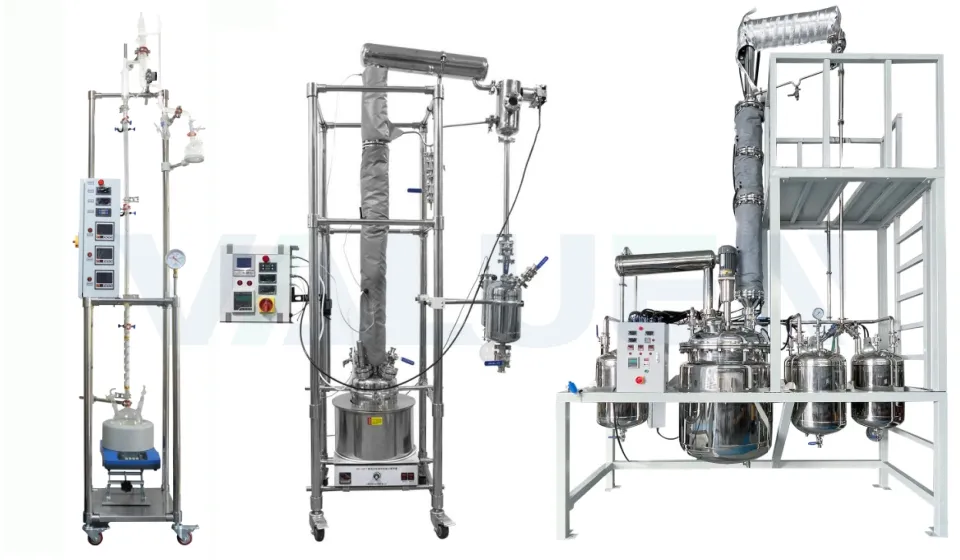
How do fractiona distillation equipment purify products from chemical processing?
Across chemical processing industries, there is a constant push for higher product purity and more accurate component separation. Among the most effective and widely adopted technologies for this purpose are fractional distillation systems. These advanced setups offer exceptional control over purification by leveraging the natural differences in boiling points among mixture components—delivering purity levels that satisfy even the most demanding industrial standards.
By enabling multiple theoretical stages inside a single column, fractional distillation systems achieve far greater separation efficiency than simple distillation methods. Unlike basic approaches, they use specialized packing or structured plates to create repeated vaporization and condensation cycles. This process progressively concentrates target components while stripping away impurities. The outcome is a marked improvement in product purity, making fractional distillation essential for industries that require high-grade chemical outputs.
Enhanced Separation Through Multiple Theoretical Plates
Column Design and the Theoretical Plate Concept
The superior separation performance of fractional distillation systems comes from integrating multiple theoretical plates within the distillation column. Each plate represents one discrete stage where vapor and liquid phases reach equilibrium, allowing more volatile components to become progressively enriched. Depending on the separation complexity and desired purity, modern systems typically incorporate anywhere from 10 to 100 theoretical plates.
By maximizing contact between rising vapor and falling liquid—via structured packing or perforated trays—these systems ensure optimal mass transfer. As a result, fractional distillation achieves separation factors far beyond those of simple distillation, with some applications reaching purities above 99.9% for critical chemical compounds.
Reflux Ratio Optimization for Maximum Purity
The reflux ratio is a key control parameter that directly shapes final product purity. By sending a portion of condensed overhead vapor back into the column, operators can fine-tune separation performance to meet specific purity targets. In general, higher reflux ratios boost purity, though this must be balanced against energy use and throughput.
Advanced fractional distillation systems now include automated reflux controls that continuously adjust the ratio based on real-time composition data. This dynamic fine-tuning ensures consistent product purity while preserving operational efficiency. Facilities using such intelligent controls report purity gains of 15–25% compared to fixed-ratio operations—clear proof that proper reflux management greatly enhances product quality.
Precise Temperature and Pressure Control
Managing Temperature Gradients
Precise temperature management is central to how fractional distillation systems improve product purity. These systems maintain carefully controlled temperature gradients along the column height, creating ideal conditions for selective separation. The temperature at each theoretical plate must match the equilibrium requirements of the intended separation—something that demands sophisticated monitoring and control infrastructure.
Modern fractional distillation units use distributed temperature sensing networks to provide real-time feedback on column performance. This continuous monitoring allows operators to detect and correct deviations before they compromise purity, ensuring stable separation efficiency over long production runs. With such precision, systems can separate components whose boiling points differ by as little as 2–5°C.
Vacuum Operation for Heat-Sensitive Materials
Many chemical processing applications involve heat-sensitive compounds that decompose at high temperatures, making conventional atmospheric distillation unsuitable. Fractional distillation systems overcome this by operating under vacuum, which lowers pressure and consequently reduces the required separation temperatures. This capability is vital for preserving product purity when handling thermally labile chemicals.
Vacuum-based fractional distillation units incorporate sophisticated vacuum control equipment—pumps, pressure regulators, and leak detection systems—to maintain stable reduced-pressure conditions. This enables high-purity separations of temperature-sensitive products while preventing thermal degradation that would otherwise harm both quality and yield.
Advanced Column Internals and Packing Technologies
Performance Advantages of Structured Packing
The choice of column internals significantly influences how well fractional distillation systems improve product purity. Structured packing represents the current state of the art for high-efficiency separations, delivering superior mass transfer compared to traditional random packing or tray designs. These engineered geometries create uniform flow patterns and maximize the interfacial area between vapor and liquid.
Modern structured packing can achieve theoretical plate efficiencies of 90–95%, directly translating into better separation and higher product purity. Its low pressure drop also allows fractional distillation systems to run with reduced energy consumption while maintaining efficiency. Facilities that switch to structured packing report purity improvements of 10–20% over conventional tray columns.
Optimization Strategies for Random Packing
While structured packing leads in performance, random packing remains valuable for certain applications. Advanced random packing options—such as metal or ceramic Raschig rings, Pall rings, and saddle-shaped elements—offer cost-effective ways to raise product purity for less demanding separations.
The key to maximizing purity gains with random packing lies in correct selection and installation. Fractional distillation systems using optimized random packing can achieve theoretical plate efficiencies of 70–80%, which is sufficient for many chemical processing tasks. Additionally, random packing is robust and performs well in corrosive environments where structured packing may not be suitable.
Process Control and Automation Integration
Real-Time Composition Monitoring
Advanced fractional distillation systems now include sophisticated analytical instruments for real-time monitoring of product composition and purity. Online gas chromatography, infrared spectroscopy, and mass spectrometry provide continuous feedback on separation performance, enabling operators to make immediate adjustments to maintain target purity levels.
These analytical tools integrate seamlessly with process control platforms, creating closed-loop strategies that automatically adjust operating parameters to optimize purity. Systems equipped with such process analytical technology report purity variations of less than 0.1%—a dramatic improvement in consistency over manual methods. This level of precision is essential for applications with stringent quality requirements.
Predictive Control Algorithms
Modern fractional distillation systems increasingly rely on predictive control algorithms that anticipate process upsets and proactively adjust conditions to maintain optimal separation. These advanced strategies use mathematical models to forecast future system behavior and take corrective action before purity drifts outside specifications.
Implementing predictive control in fractional distillation systems has yielded notable gains in purity stability and overall efficiency. Chemical processors report 40–60% reductions in off-specification product when using predictive control compared to conventional feedback methods. This enhanced control directly improves product purity and cuts waste, supporting both quality and sustainability goals.
Energy Efficiency and Heat Integration
Optimizing Heat Exchanger Networks
Fractional distillation systems can be integrated into comprehensive heat exchanger networks to maximize energy efficiency without sacrificing product purity. Heat integration strategies recover thermal energy from hot product streams and reuse it to preheat feed materials or generate steam for the reboiler. This lowers external energy demand while preserving the separation performance that enables high purity.
Well-designed heat integration schemes can cut energy use by 30–50% compared to non-integrated configurations—all without compromising product purity, since heat integration operates independently of the separation process. Facilities that adopt comprehensive heat integration report lower operating costs and maintained or even improved quality specifications.
Multiple-Effect Distillation Configurations
For applications that involve several fractional distillation systems operating at different pressure levels, multiple-effect configurations offer significant energy savings while preserving each column’s separation performance. These setups use vapor from higher-pressure columns to heat lower-pressure units, creating an energy cascade that reduces overall utility demand.
Multiple-effect fractional distillation systems maintain the same high product purity as standalone units while delivering substantial energy reductions. The improved thermal efficiency allows chemical processors to meet purity targets at a lower cost, making high-quality separation economically viable for a broader range of applications. This configuration is especially beneficial for large-scale operations with multiple product streams requiring purification.
FAQ
What purity levels can fractional distillation systems achieve in chemical processing?
Fractional distillation systems routinely achieve product purities of 95–99.9%, depending on the application and system design. For critical pharmaceutical or electronic chemical applications, specially designed units with high theoretical plate counts can reach purities above 99.95%. Achievable purity depends on factors such as relative volatility of components, column efficiency, reflux ratio, and feed composition.
How do fractional distillation systems compare to other separation methods for improving product purity?
Fractional distillation offers unique advantages over alternative methods. While membrane separation or crystallization can also achieve high purity for specific cases, fractional distillation provides versatile separation across a wide range of chemical systems. It excels particularly for liquid mixtures with moderate relative volatilities and can handle varying feed compositions while maintaining consistent purity.
What maintenance is required to preserve product purity in fractional distillation systems?
Maintaining optimal purity requires regular inspection and upkeep of column internals, temperature sensors, pressure control equipment, and analytical instrumentation. Packing materials should be inspected annually for fouling or mechanical damage, while control system calibration should be verified quarterly. A proper maintenance schedule ensures consistent separation performance and prevents purity loss due to equipment wear.
Can fractional distillation systems handle corrosive chemicals while maintaining product purity?
Yes. Modern fractional distillation systems can be built from specialized materials—stainless steel, Hastelloy, fluoropolymer-lined components—to handle corrosive environments. Material selection is critical for both system integrity and product purity, because corrosion products can contaminate the final output. Proper material choice and corrosion monitoring programs ensure long-term operation with consistent purity in aggressive chemical settings.
How do fractiona distillation equipment purify products from chemical processing?
Across chemical processing industries, there is a constant push for higher product purity and more accurate component separation. Among the most effective and widely adopted technologies for this purpose are fractional distillation systems. These advanced setups offer exceptional control over purification by leveraging the natural differences in boiling points among mixture components—delivering purity levels that satisfy even the most demanding industrial standards.
By enabling multiple theoretical stages inside a single column, fractional distillation systems achieve far greater separation efficiency than simple distillation methods. Unlike basic approaches, they use specialized packing or structured plates to create repeated vaporization and condensation cycles. This process progressively concentrates target components while stripping away impurities. The outcome is a marked improvement in product purity, making fractional distillation essential for industries that require high-grade chemical outputs.
Enhanced Separation Through Multiple Theoretical Plates
Column Design and the Theoretical Plate Concept
The superior separation performance of fractional distillation systems comes from integrating multiple theoretical plates within the distillation column. Each plate represents one discrete stage where vapor and liquid phases reach equilibrium, allowing more volatile components to become progressively enriched. Depending on the separation complexity and desired purity, modern systems typically incorporate anywhere from 10 to 100 theoretical plates.
By maximizing contact between rising vapor and falling liquid—via structured packing or perforated trays—these systems ensure optimal mass transfer. As a result, fractional distillation achieves separation factors far beyond those of simple distillation, with some applications reaching purities above 99.9% for critical chemical compounds.
Reflux Ratio Optimization for Maximum Purity
The reflux ratio is a key control parameter that directly shapes final product purity. By sending a portion of condensed overhead vapor back into the column, operators can fine-tune separation performance to meet specific purity targets. In general, higher reflux ratios boost purity, though this must be balanced against energy use and throughput.
Advanced fractional distillation systems now include automated reflux controls that continuously adjust the ratio based on real-time composition data. This dynamic fine-tuning ensures consistent product purity while preserving operational efficiency. Facilities using such intelligent controls report purity gains of 15–25% compared to fixed-ratio operations—clear proof that proper reflux management greatly enhances product quality.
Precise Temperature and Pressure Control
Managing Temperature Gradients
Precise temperature management is central to how fractional distillation systems improve product purity. These systems maintain carefully controlled temperature gradients along the column height, creating ideal conditions for selective separation. The temperature at each theoretical plate must match the equilibrium requirements of the intended separation—something that demands sophisticated monitoring and control infrastructure.
Modern fractional distillation units use distributed temperature sensing networks to provide real-time feedback on column performance. This continuous monitoring allows operators to detect and correct deviations before they compromise purity, ensuring stable separation efficiency over long production runs. With such precision, systems can separate components whose boiling points differ by as little as 2–5°C.
Vacuum Operation for Heat-Sensitive Materials
Many chemical processing applications involve heat-sensitive compounds that decompose at high temperatures, making conventional atmospheric distillation unsuitable. Fractional distillation systems overcome this by operating under vacuum, which lowers pressure and consequently reduces the required separation temperatures. This capability is vital for preserving product purity when handling thermally labile chemicals.
Vacuum-based fractional distillation units incorporate sophisticated vacuum control equipment—pumps, pressure regulators, and leak detection systems—to maintain stable reduced-pressure conditions. This enables high-purity separations of temperature-sensitive products while preventing thermal degradation that would otherwise harm both quality and yield.
Advanced Column Internals and Packing Technologies
Performance Advantages of Structured Packing
The choice of column internals significantly influences how well fractional distillation systems improve product purity. Structured packing represents the current state of the art for high-efficiency separations, delivering superior mass transfer compared to traditional random packing or tray designs. These engineered geometries create uniform flow patterns and maximize the interfacial area between vapor and liquid.
Modern structured packing can achieve theoretical plate efficiencies of 90–95%, directly translating into better separation and higher product purity. Its low pressure drop also allows fractional distillation systems to run with reduced energy consumption while maintaining efficiency. Facilities that switch to structured packing report purity improvements of 10–20% over conventional tray columns.
Optimization Strategies for Random Packing
While structured packing leads in performance, random packing remains valuable for certain applications. Advanced random packing options—such as metal or ceramic Raschig rings, Pall rings, and saddle-shaped elements—offer cost-effective ways to raise product purity for less demanding separations.
The key to maximizing purity gains with random packing lies in correct selection and installation. Fractional distillation systems using optimized random packing can achieve theoretical plate efficiencies of 70–80%, which is sufficient for many chemical processing tasks. Additionally, random packing is robust and performs well in corrosive environments where structured packing may not be suitable.
Process Control and Automation Integration
Real-Time Composition Monitoring
Advanced fractional distillation systems now include sophisticated analytical instruments for real-time monitoring of product composition and purity. Online gas chromatography, infrared spectroscopy, and mass spectrometry provide continuous feedback on separation performance, enabling operators to make immediate adjustments to maintain target purity levels.
These analytical tools integrate seamlessly with process control platforms, creating closed-loop strategies that automatically adjust operating parameters to optimize purity. Systems equipped with such process analytical technology report purity variations of less than 0.1%—a dramatic improvement in consistency over manual methods. This level of precision is essential for applications with stringent quality requirements.
Predictive Control Algorithms
Modern fractional distillation systems increasingly rely on predictive control algorithms that anticipate process upsets and proactively adjust conditions to maintain optimal separation. These advanced strategies use mathematical models to forecast future system behavior and take corrective action before purity drifts outside specifications.
Implementing predictive control in fractional distillation systems has yielded notable gains in purity stability and overall efficiency. Chemical processors report 40–60% reductions in off-specification product when using predictive control compared to conventional feedback methods. This enhanced control directly improves product purity and cuts waste, supporting both quality and sustainability goals.
Energy Efficiency and Heat Integration
Optimizing Heat Exchanger Networks
Fractional distillation systems can be integrated into comprehensive heat exchanger networks to maximize energy efficiency without sacrificing product purity. Heat integration strategies recover thermal energy from hot product streams and reuse it to preheat feed materials or generate steam for the reboiler. This lowers external energy demand while preserving the separation performance that enables high purity.
Well-designed heat integration schemes can cut energy use by 30–50% compared to non-integrated configurations—all without compromising product purity, since heat integration operates independently of the separation process. Facilities that adopt comprehensive heat integration report lower operating costs and maintained or even improved quality specifications.
Multiple-Effect Distillation Configurations
For applications that involve several fractional distillation systems operating at different pressure levels, multiple-effect configurations offer significant energy savings while preserving each column’s separation performance. These setups use vapor from higher-pressure columns to heat lower-pressure units, creating an energy cascade that reduces overall utility demand.
Multiple-effect fractional distillation systems maintain the same high product purity as standalone units while delivering substantial energy reductions. The improved thermal efficiency allows chemical processors to meet purity targets at a lower cost, making high-quality separation economically viable for a broader range of applications. This configuration is especially beneficial for large-scale operations with multiple product streams requiring purification.
FAQ
What purity levels can fractional distillation systems achieve in chemical processing?
Fractional distillation systems routinely achieve product purities of 95–99.9%, depending on the application and system design. For critical pharmaceutical or electronic chemical applications, specially designed units with high theoretical plate counts can reach purities above 99.95%. Achievable purity depends on factors such as relative volatility of components, column efficiency, reflux ratio, and feed composition.
How do fractional distillation systems compare to other separation methods for improving product purity?
Fractional distillation offers unique advantages over alternative methods. While membrane separation or crystallization can also achieve high purity for specific cases, fractional distillation provides versatile separation across a wide range of chemical systems. It excels particularly for liquid mixtures with moderate relative volatilities and can handle varying feed compositions while maintaining consistent purity.
What maintenance is required to preserve product purity in fractional distillation systems?
Maintaining optimal purity requires regular inspection and upkeep of column internals, temperature sensors, pressure control equipment, and analytical instrumentation. Packing materials should be inspected annually for fouling or mechanical damage, while control system calibration should be verified quarterly. A proper maintenance schedule ensures consistent separation performance and prevents purity loss due to equipment wear.
Can fractional distillation systems handle corrosive chemicals while maintaining product purity?
Yes. Modern fractional distillation systems can be built from specialized materials—stainless steel, Hastelloy, fluoropolymer-lined components—to handle corrosive environments. Material selection is critical for both system integrity and product purity, because corrosion products can contaminate the final output. Proper material choice and corrosion monitoring programs ensure long-term operation with consistent purity in aggressive chemical settings.


