
How to Choose the Right Jacketed Glass Reactor for Your Application
2026-09-24
How to Choose the Right Jacketed Glass Reactor for Your Application
Choosing a jacketed glass reactor requires more than simply selecting a vessel with the required capacity. The material being processed, working volume, temperature range, mixing requirements, and operating conditions should all be considered before making a decision. A properly configured reactor can provide better process control and make daily operation more convenient.
1. How Do You Determine the Right Reactor Capacity?
The first step is to determine the required working volume rather than choosing the reactor based only on its total volume.
The vessel should provide enough space for mixing, heating or cooling, and possible expansion during the process. For laboratory research and small-scale testing, smaller reactors are generally suitable, while larger vessels can be considered for pilot-scale or production applications.
It is also important to leave sufficient headspace rather than filling the vessel to its maximum capacity.
2. How Should You Consider the Material Being Processed?
The properties of the material directly affect the reactor configuration.
Consider factors such as viscosity, solids content, chemical composition, and whether the material is sensitive to temperature. Borosilicate glass is commonly selected for its good chemical resistance and visibility, but the compatibility of other wetted components should also be checked.
For example, the stirrer, shaft, seals, valves, and other contacting parts should be suitable for the chemicals and solvents used in the process.
3. What Temperature Range Do You Need?
Temperature control is another important factor when selecting a jacketed glass reactor.
Determine the required heating and cooling range first, then select a suitable jacket and temperature-control system. The heating or cooling medium circulates through the jacket to transfer heat without directly contacting the process material.
For processes involving sensitive materials or significant temperature changes, the reactor and supporting temperature-control equipment should be selected according to the actual thermal requirements.
4. What Mixing System Is Suitable?
Different materials require different stirring solutions.
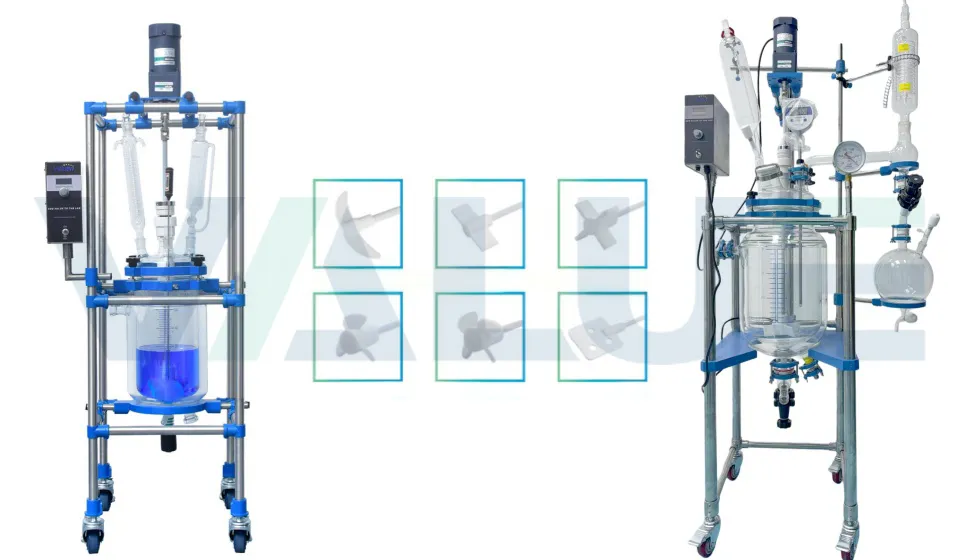
Low-viscosity liquids may only require a standard agitator, while viscous materials, suspensions, or products containing solids may need a specially designed stirrer. Stirrer type, speed range, motor power, and impeller design should therefore be considered together with the material properties.
If the process requires high-viscosity mixing or a specific flow pattern, it is better to discuss these requirements with the reactor supplier before selecting the final configuration.
5. Do You Need Vacuum or Other Special Conditions?
If the process involves vacuum operation, solvent evaporation, distillation, or pressure-related conditions, these requirements should be confirmed before ordering the reactor.
The vessel, seals, valves, and other components need to be compatible with the intended operating conditions. Additional equipment such as a vacuum pump, condenser, receiving flask, or temperature-control unit may also be required to complete the system.
6. What Reactor Configuration Should You Choose?
The configuration should be based on how the reactor will actually be used.
Consider the required ports, bottom discharge valve, feeding openings, condenser connection, temperature sensors, sampling points, and other accessories. For processes that require frequent material changes or cleaning, accessibility and convenient discharge can also be important.
A standard configuration may be sufficient for straightforward applications, while more customized designs can be considered when the process has specific requirements.
7. What Should You Check Before Placing an Order?
Before purchasing a jacketed glass reactor, it is useful to confirm:
- Required working and total volume
- Material and chemical compatibility
- Heating and cooling range
- Stirring speed and agitator type
- Vacuum or pressure requirements
- Required ports and valves
- Available installation space
- Compatibility with supporting equipment
It is also important to communicate the actual process conditions to the supplier. This allows the technical team to recommend a suitable vessel configuration instead of selecting the reactor based on capacity alone.
Conclusion
Selecting the right jacketed glass reactor starts with understanding the actual process requirements. Capacity, material properties, temperature control, mixing, vacuum conditions, and reactor configuration all play a role in determining the most suitable equipment.
By evaluating these factors before purchase, you can choose a reactor that fits your process requirements while providing practical operation and reliable temperature control.
How to Choose the Right Jacketed Glass Reactor for Your Application
Choosing a jacketed glass reactor requires more than simply selecting a vessel with the required capacity. The material being processed, working volume, temperature range, mixing requirements, and operating conditions should all be considered before making a decision. A properly configured reactor can provide better process control and make daily operation more convenient.
1. How Do You Determine the Right Reactor Capacity?
The first step is to determine the required working volume rather than choosing the reactor based only on its total volume.
The vessel should provide enough space for mixing, heating or cooling, and possible expansion during the process. For laboratory research and small-scale testing, smaller reactors are generally suitable, while larger vessels can be considered for pilot-scale or production applications.
It is also important to leave sufficient headspace rather than filling the vessel to its maximum capacity.
2. How Should You Consider the Material Being Processed?
The properties of the material directly affect the reactor configuration.
Consider factors such as viscosity, solids content, chemical composition, and whether the material is sensitive to temperature. Borosilicate glass is commonly selected for its good chemical resistance and visibility, but the compatibility of other wetted components should also be checked.
For example, the stirrer, shaft, seals, valves, and other contacting parts should be suitable for the chemicals and solvents used in the process.
3. What Temperature Range Do You Need?
Temperature control is another important factor when selecting a jacketed glass reactor.
Determine the required heating and cooling range first, then select a suitable jacket and temperature-control system. The heating or cooling medium circulates through the jacket to transfer heat without directly contacting the process material.
For processes involving sensitive materials or significant temperature changes, the reactor and supporting temperature-control equipment should be selected according to the actual thermal requirements.
4. What Mixing System Is Suitable?
Different materials require different stirring solutions.
Low-viscosity liquids may only require a standard agitator, while viscous materials, suspensions, or products containing solids may need a specially designed stirrer. Stirrer type, speed range, motor power, and impeller design should therefore be considered together with the material properties.
If the process requires high-viscosity mixing or a specific flow pattern, it is better to discuss these requirements with the reactor supplier before selecting the final configuration.
5. Do You Need Vacuum or Other Special Conditions?
If the process involves vacuum operation, solvent evaporation, distillation, or pressure-related conditions, these requirements should be confirmed before ordering the reactor.
The vessel, seals, valves, and other components need to be compatible with the intended operating conditions. Additional equipment such as a vacuum pump, condenser, receiving flask, or temperature-control unit may also be required to complete the system.
6. What Reactor Configuration Should You Choose?
The configuration should be based on how the reactor will actually be used.
Consider the required ports, bottom discharge valve, feeding openings, condenser connection, temperature sensors, sampling points, and other accessories. For processes that require frequent material changes or cleaning, accessibility and convenient discharge can also be important.
A standard configuration may be sufficient for straightforward applications, while more customized designs can be considered when the process has specific requirements.
7. What Should You Check Before Placing an Order?
Before purchasing a jacketed glass reactor, it is useful to confirm:
- Required working and total volume
- Material and chemical compatibility
- Heating and cooling range
- Stirring speed and agitator type
- Vacuum or pressure requirements
- Required ports and valves
- Available installation space
- Compatibility with supporting equipment
It is also important to communicate the actual process conditions to the supplier. This allows the technical team to recommend a suitable vessel configuration instead of selecting the reactor based on capacity alone.
Conclusion
Selecting the right jacketed glass reactor starts with understanding the actual process requirements. Capacity, material properties, temperature control, mixing, vacuum conditions, and reactor configuration all play a role in determining the most suitable equipment.
By evaluating these factors before purchase, you can choose a reactor that fits your process requirements while providing practical operation and reliable temperature control.


