
What Is a Rotary and Liftable Jacketed Reactor?
2026-09-18
What Is a Rotary and Liftable Jacketed Reactor?
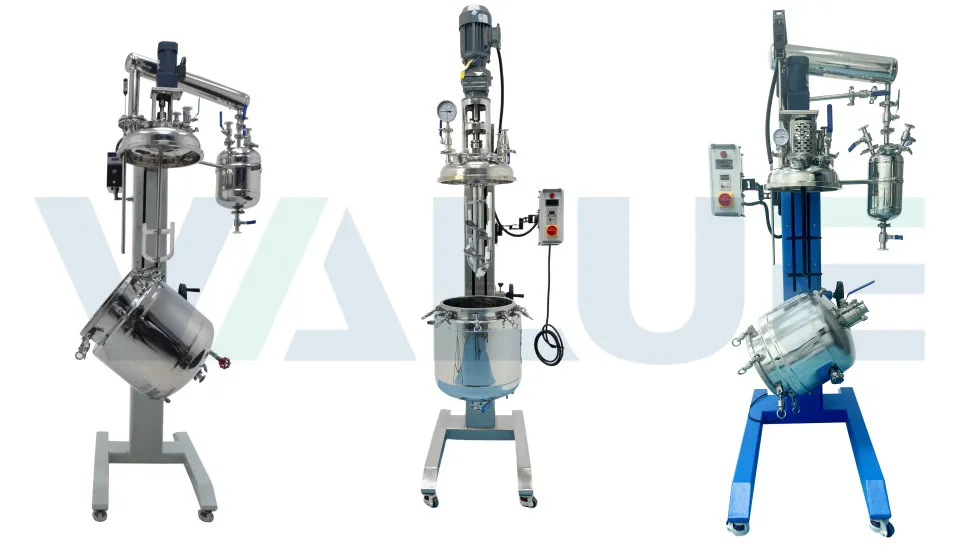
A rotary and liftable jacketed reactor is a versatile processing vessel designed for applications that require controlled mixing, heating or cooling, and convenient material handling. By combining a jacketed vessel with rotary movement and a lifting mechanism, this type of reactor can provide greater flexibility than a conventional fixed reactor.
It is commonly used in chemical, pharmaceutical, material processing, and formulation applications where temperature control and easy access to the vessel are important.
How Does a Rotary and Liftable Jacketed Reactor Work?
The reactor uses an external jacket to regulate the temperature of the material inside the vessel. A heating or cooling medium circulates through the jacket, transferring heat through the vessel wall without coming into direct contact with the process material.
The rotary function helps move and mix the material during processing. Depending on the reactor design and product characteristics, rotation can improve material distribution and support more uniform processing.
The lifting mechanism allows the vessel or reactor assembly to be raised when needed. This provides easier access for loading, unloading, cleaning, inspection, and maintenance.
Together, these three functions provide:
- Jacketed temperature control for heating and cooling
- Rotary movement for improved material handling and mixing
- Liftable access for easier operation and maintenance
Why Use a Rotary and Liftable Reactor?
A conventional reactor can perform many standard chemical processes, but some applications require additional flexibility.
The rotary function can be useful when the material needs continuous movement or when a different mixing pattern is required. This is particularly relevant for viscous materials, suspensions, and formulations where uniform material distribution is important.
The liftable design focuses on accessibility. Raising the vessel can make it easier to reach internal components and surrounding equipment, which can simplify cleaning and routine maintenance.
For processes involving frequent product changes, cleaning, or different material-handling requirements, this added flexibility can be particularly useful.
What Materials Can Be Processed?
The appropriate reactor configuration depends on the properties of the material.
Low-viscosity liquids may require relatively simple agitation, while highly viscous materials can require specially designed mixing components and greater motor power. Suspensions and slurries may also require careful consideration of particle size, solids concentration, and settling behavior.
For temperature-sensitive materials, the jacket provides indirect heating and cooling, allowing the process temperature to be controlled without placing a heating element directly into the product.
Stainless steel is commonly used for industrial reactors because of its strength, durability, and corrosion resistance. The specific grade should be selected according to the chemicals and operating conditions involved.
Where Are Rotary and Liftable Jacketed Reactors Used?
These reactors can be adapted for a range of industrial applications, including:
Chemical processing:
Suitable for reactions, blending, formulation, and other processes requiring controlled temperature and material movement.
Pharmaceutical processing:
Can be configured for processes where controlled operating conditions and convenient cleaning are important.
Polymer and material processing:
Useful for materials whose viscosity changes during processing and therefore require appropriate mixing performance.
Specialty chemical and formulation applications:
The flexible configuration can accommodate different materials, temperatures, and process requirements.
How Do You Choose the Right Reactor?
Several factors should be considered before selecting a rotary and liftable jacketed reactor:
- Required working volume
- Material viscosity and solids content
- Required heating and cooling range
- Mixing or rotary requirements
- Chemical compatibility of wetted parts
- Vacuum or pressure requirements
- Cleaning and maintenance requirements
- Required lifting height and operating space
Additional equipment such as heating or cooling circulators, vacuum pumps, condensers, temperature sensors, and feeding systems can also be integrated according to the process.
Conclusion
A rotary and liftable jacketed reactor combines temperature control, material movement, and improved accessibility in one processing system. The jacket manages heating and cooling, the rotary function supports material mixing or movement, and the lifting mechanism makes cleaning, inspection, and maintenance more convenient.
For chemical, pharmaceutical, polymer, and formulation processes, the right configuration should be selected based on the actual material properties and operating conditions rather than vessel capacity alone.
What Is a Rotary and Liftable Jacketed Reactor?
A rotary and liftable jacketed reactor is a versatile processing vessel designed for applications that require controlled mixing, heating or cooling, and convenient material handling. By combining a jacketed vessel with rotary movement and a lifting mechanism, this type of reactor can provide greater flexibility than a conventional fixed reactor.
It is commonly used in chemical, pharmaceutical, material processing, and formulation applications where temperature control and easy access to the vessel are important.
How Does a Rotary and Liftable Jacketed Reactor Work?
The reactor uses an external jacket to regulate the temperature of the material inside the vessel. A heating or cooling medium circulates through the jacket, transferring heat through the vessel wall without coming into direct contact with the process material.
The rotary function helps move and mix the material during processing. Depending on the reactor design and product characteristics, rotation can improve material distribution and support more uniform processing.
The lifting mechanism allows the vessel or reactor assembly to be raised when needed. This provides easier access for loading, unloading, cleaning, inspection, and maintenance.
Together, these three functions provide:
- Jacketed temperature control for heating and cooling
- Rotary movement for improved material handling and mixing
- Liftable access for easier operation and maintenance
Why Use a Rotary and Liftable Reactor?
A conventional reactor can perform many standard chemical processes, but some applications require additional flexibility.
The rotary function can be useful when the material needs continuous movement or when a different mixing pattern is required. This is particularly relevant for viscous materials, suspensions, and formulations where uniform material distribution is important.
The liftable design focuses on accessibility. Raising the vessel can make it easier to reach internal components and surrounding equipment, which can simplify cleaning and routine maintenance.
For processes involving frequent product changes, cleaning, or different material-handling requirements, this added flexibility can be particularly useful.
What Materials Can Be Processed?
The appropriate reactor configuration depends on the properties of the material.
Low-viscosity liquids may require relatively simple agitation, while highly viscous materials can require specially designed mixing components and greater motor power. Suspensions and slurries may also require careful consideration of particle size, solids concentration, and settling behavior.
For temperature-sensitive materials, the jacket provides indirect heating and cooling, allowing the process temperature to be controlled without placing a heating element directly into the product.
Stainless steel is commonly used for industrial reactors because of its strength, durability, and corrosion resistance. The specific grade should be selected according to the chemicals and operating conditions involved.
Where Are Rotary and Liftable Jacketed Reactors Used?
These reactors can be adapted for a range of industrial applications, including:
Chemical processing:
Suitable for reactions, blending, formulation, and other processes requiring controlled temperature and material movement.
Pharmaceutical processing:
Can be configured for processes where controlled operating conditions and convenient cleaning are important.
Polymer and material processing:
Useful for materials whose viscosity changes during processing and therefore require appropriate mixing performance.
Specialty chemical and formulation applications:
The flexible configuration can accommodate different materials, temperatures, and process requirements.
How Do You Choose the Right Reactor?
Several factors should be considered before selecting a rotary and liftable jacketed reactor:
- Required working volume
- Material viscosity and solids content
- Required heating and cooling range
- Mixing or rotary requirements
- Chemical compatibility of wetted parts
- Vacuum or pressure requirements
- Cleaning and maintenance requirements
- Required lifting height and operating space
Additional equipment such as heating or cooling circulators, vacuum pumps, condensers, temperature sensors, and feeding systems can also be integrated according to the process.
Conclusion
A rotary and liftable jacketed reactor combines temperature control, material movement, and improved accessibility in one processing system. The jacket manages heating and cooling, the rotary function supports material mixing or movement, and the lifting mechanism makes cleaning, inspection, and maintenance more convenient.
For chemical, pharmaceutical, polymer, and formulation processes, the right configuration should be selected based on the actual material properties and operating conditions rather than vessel capacity alone.


