
What Is Vacuum Fractional Distillation and How Does It Work for Citronella Oil Processing?
2026-07-13
What Is Vacuum Fractional Distillation and How Does It Work for Citronella Oil Processing?
Understanding Citronella Oil Composition
Before designing an effective separation process, it is essential to understand the chemical makeup of citronella oil.
Citronella oil is primarily obtained through steam distillation of Cymbopogon winterianus and Cymbopogon nardus. The oil consists of a diverse blend of terpenes, alcohols, aldehydes, and hydrocarbon compounds.
Typical composition of citronella oil:
|
Component |
Typical Content (%) |
|
Citronellal |
30–45 |
|
Geraniol |
15–25 |
|
Citronellol |
10–20 |
|
Limonene |
5–10 |
|
Other Terpenes / Balance |
5–10 |
Aroma Profile: The distinctive citrus-like fragrance of citronella oil arises from the synergistic interaction of its various terpenes and alcohol constituents.
The primary separation challenge lies in the fact that many of these compounds exhibit closely overlapping boiling points. Simple distillation methods are inadequate for achieving high purity. As a result, vacuum fractional distillation system—combined with an efficient packed column—is typically required for effective citronella purification.
The Market Value of Citronella Oil
Citronella oil enjoys broad industrial application due to its refreshing citrus scent and chemical versatility.
Fragrance and Personal Care
l Citronella oil serves as a key ingredient in:
l Perfumes and colognes
l Deodorants and antiperspirants
l Air fresheners and room sprays
l Household cleaning agents
l Cosmetic and personal care formulations
Natural Insect Repellents
Citronella oil is one of the most widely recognized active ingredients in plant-based mosquito repellents and outdoor protection products.
Menthol Production
One of the largest industrial uses of citronella oil is its conversion into menthol—a compound extensively used in pharmaceuticals, oral care products, and food flavourings.
Fine Chemicals and Intermediates
Purified citronella derivatives serve as intermediates for the synthesis of:
l Hydroxycitronellal
l Citronellol and its esters
l Specialty fragrance compounds
Since refined citronella fractions command significantly higher market prices than crude oil, investing in citronella purification equipment can substantially enhance profitability for essential oil producers.
Why Choose Vacuum Fractional Distillation Equipment for Citronella Extraction?
Traditional atmospheric distillation often operates at elevated temperatures, which can lead to:
l Oxidation of sensitive components
l Discolouration of the product
l Degradation of the aroma profile
l Reduced overall citronella yield
These issues make vacuum distillation the preferred method in the essential oil industry.
Advantages of Vacuum Distillation
Operating under reduced pressure lowers the boiling points of all components, allowing separation to occur at much milder temperatures. This protects heat labile compounds and preserves the natural character of the oil.
Key Benefits
l Minimised thermal degradation – sensitive compounds remain intact throughout the process
l Superior product quality – improved colour, odour, and chemical integrity
l Higher recovery rates – more efficient separation of target components
Recommended Citronella Oil Distillation Workflow
A typical citronella oil distillation process follows a series of well defined stages.
Step 1: Feed Preparation
Crude citronella oil is filtered to remove suspended solids and particulate impurities.
Step 2: Vacuum Generation
The distillation system is evacuated to the target operating pressure before heating commences.
Step 3: Removal of Light Fractions
Low boiling compounds—such as limonene and certain terpenes—are distilled off first as initial fractions.
Step 4: Citronella Fraction Collection
The mid boiling cut, enriched in citronellal, is collected as the primary product.
Step 5: Separation of Heavy Fractions
Higher-boiling components—including citronellol and geraniol—are recovered in subsequent fractions.
Step 6: Product Refinement
Depending on purity specifications, the collected product may undergo a second-stage vacuum fractional distillation for further enrichment.
This workflow is widely adopted in both pilot scale and industrial fractional distillation equipment for essential oil processing.
Selecting the Right Vacuum Level
Choosing the appropriate vacuum level is one of the most critical decisions affecting separation efficiency and product quality.
Factors Influencing Vacuum Selection
l Feed composition
l Desired product purity
l Column design and packing type
l Production throughput
Typical Operating Vacuum Ranges
|
Vacuum Level (MPa) |
Application |
|
0.085 |
Basic separation tasks |
|
0.090 |
Improved fractionation performance |
|
0.095 |
High purity citronella oil production |
|
0.098 |
Premium, high specification purification |
Benefits of Operating at Higher Vacuum
l Lower boiling temperatures – reduced thermal stress on components
l Better preservation of delicate aroma notes
l Decreased oxidation risk
l Potential energy savings due to lower heating requirements
Packed Column Design for Citronella Purification
The fractionation column is the heart of any vacuum fractional distillation system. Its design directly influences both separation efficiency and final product purity.
Column Height Selection
Typical packed column heights range from:
l Laboratory / Pilot scale: 1.5–2 m
l Industrial scale: 2–4 m
Higher purity requirements generally necessitate taller columns, as they provide more theoretical stages for separation.
Column Diameter Selection
Column diameter is determined by:
l Feed volume and throughput
l Vapour flow rates
l Production capacity targets
Proper sizing is essential to prevent flooding (excessive liquid holdup) and ensure stable, continuous operation.
Packing Material Selection
Common packing options include:
|
Packing Type |
Advantages |
|
Stainless Steel Structured Packing |
High separation efficiency; low pressure drop; excellent vacuum performance |
|
Raschig Rings / Random Packing |
Cost effective; easy to install; suitable for medium purity applications |
|
Wire Mesh / Gauze Packing |
High theoretical plate count; superior separation performance; widely used in essential oil purification |
For high-purity citronella purification, stainless steel structured packing is often the preferred choice due to its combination of efficiency, durability, and low pressure drop.
Typical Fractional Distillation Equipment Configuration
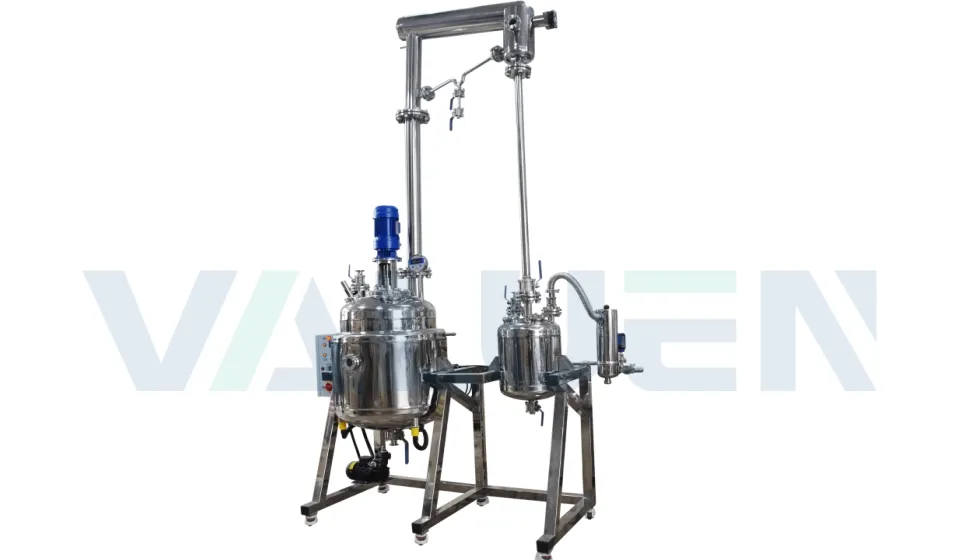
A complete fractional distillation equipment system for citronella oil processing typically includes:
Jacketed Stainless Steel Distillation Reactor
l SS304 or SS316L construction
l Electric or thermal oil heating jacket
l Vacuum resistant design
Packed Fractionation Column
l 1–4 m column height (depending on purity requirements)
l Structured or random packing options
l Vacuum-rated flanged connections
Condenser System
l Shell and tube condenser design
l Efficient vapour cooling and recovery
l Optional secondary condenser for volatile fractions
Vacuum System
l Liquid ring or dry screw vacuum pump
l Vacuum booster options for enhanced performance
l Precise pressure control instrumentation
Receiving Vessels
l Jacketed stainless steel tanks
l Multiple fraction collection capability
l Sample ports for quality monitoring
Conclusion
As demand for natural fragrance ingredients continues its upward trajectory, efficient citronella extraction has become increasingly vital for essential oil manufacturers. By employing a well designed vacuum fractional distillation system, producers can achieve reliable citronella purification while preserving product quality and maximising profitability.
Successful citronella oil distillation depends on several interrelated factors: feedstock composition, vacuum level selection, reflux ratio control, and packed column design. With the right fractional distillation equipment and process optimisation, manufacturers can efficiently separate citronellal from crude citronella oil and produce high-value fractions for the fragrance, pharmaceutical, and specialty chemical markets.
Whether for pilot-scale development or full scale industrial production, vacuum fractional distillation remains one of the most practical, proven, and cost effective technologies for citronella recovery and purification.
What Is Vacuum Fractional Distillation and How Does It Work for Citronella Oil Processing?
Understanding Citronella Oil Composition
Before designing an effective separation process, it is essential to understand the chemical makeup of citronella oil.
Citronella oil is primarily obtained through steam distillation of Cymbopogon winterianus and Cymbopogon nardus. The oil consists of a diverse blend of terpenes, alcohols, aldehydes, and hydrocarbon compounds.
Typical composition of citronella oil:
|
Component |
Typical Content (%) |
|
Citronellal |
30–45 |
|
Geraniol |
15–25 |
|
Citronellol |
10–20 |
|
Limonene |
5–10 |
|
Other Terpenes / Balance |
5–10 |
Aroma Profile: The distinctive citrus-like fragrance of citronella oil arises from the synergistic interaction of its various terpenes and alcohol constituents.
The primary separation challenge lies in the fact that many of these compounds exhibit closely overlapping boiling points. Simple distillation methods are inadequate for achieving high purity. As a result, vacuum fractional distillation system—combined with an efficient packed column—is typically required for effective citronella purification.
The Market Value of Citronella Oil
Citronella oil enjoys broad industrial application due to its refreshing citrus scent and chemical versatility.
Fragrance and Personal Care
l Citronella oil serves as a key ingredient in:
l Perfumes and colognes
l Deodorants and antiperspirants
l Air fresheners and room sprays
l Household cleaning agents
l Cosmetic and personal care formulations
Natural Insect Repellents
Citronella oil is one of the most widely recognized active ingredients in plant-based mosquito repellents and outdoor protection products.
Menthol Production
One of the largest industrial uses of citronella oil is its conversion into menthol—a compound extensively used in pharmaceuticals, oral care products, and food flavourings.
Fine Chemicals and Intermediates
Purified citronella derivatives serve as intermediates for the synthesis of:
l Hydroxycitronellal
l Citronellol and its esters
l Specialty fragrance compounds
Since refined citronella fractions command significantly higher market prices than crude oil, investing in citronella purification equipment can substantially enhance profitability for essential oil producers.
Why Choose Vacuum Fractional Distillation Equipment for Citronella Extraction?
Traditional atmospheric distillation often operates at elevated temperatures, which can lead to:
l Oxidation of sensitive components
l Discolouration of the product
l Degradation of the aroma profile
l Reduced overall citronella yield
These issues make vacuum distillation the preferred method in the essential oil industry.
Advantages of Vacuum Distillation
Operating under reduced pressure lowers the boiling points of all components, allowing separation to occur at much milder temperatures. This protects heat labile compounds and preserves the natural character of the oil.
Key Benefits
l Minimised thermal degradation – sensitive compounds remain intact throughout the process
l Superior product quality – improved colour, odour, and chemical integrity
l Higher recovery rates – more efficient separation of target components
Recommended Citronella Oil Distillation Workflow
A typical citronella oil distillation process follows a series of well defined stages.
Step 1: Feed Preparation
Crude citronella oil is filtered to remove suspended solids and particulate impurities.
Step 2: Vacuum Generation
The distillation system is evacuated to the target operating pressure before heating commences.
Step 3: Removal of Light Fractions
Low boiling compounds—such as limonene and certain terpenes—are distilled off first as initial fractions.
Step 4: Citronella Fraction Collection
The mid boiling cut, enriched in citronellal, is collected as the primary product.
Step 5: Separation of Heavy Fractions
Higher-boiling components—including citronellol and geraniol—are recovered in subsequent fractions.
Step 6: Product Refinement
Depending on purity specifications, the collected product may undergo a second-stage vacuum fractional distillation for further enrichment.
This workflow is widely adopted in both pilot scale and industrial fractional distillation equipment for essential oil processing.
Selecting the Right Vacuum Level
Choosing the appropriate vacuum level is one of the most critical decisions affecting separation efficiency and product quality.
Factors Influencing Vacuum Selection
l Feed composition
l Desired product purity
l Column design and packing type
l Production throughput
Typical Operating Vacuum Ranges
|
Vacuum Level (MPa) |
Application |
|
0.085 |
Basic separation tasks |
|
0.090 |
Improved fractionation performance |
|
0.095 |
High purity citronella oil production |
|
0.098 |
Premium, high specification purification |
Benefits of Operating at Higher Vacuum
l Lower boiling temperatures – reduced thermal stress on components
l Better preservation of delicate aroma notes
l Decreased oxidation risk
l Potential energy savings due to lower heating requirements
Packed Column Design for Citronella Purification
The fractionation column is the heart of any vacuum fractional distillation system. Its design directly influences both separation efficiency and final product purity.
Column Height Selection
Typical packed column heights range from:
l Laboratory / Pilot scale: 1.5–2 m
l Industrial scale: 2–4 m
Higher purity requirements generally necessitate taller columns, as they provide more theoretical stages for separation.
Column Diameter Selection
Column diameter is determined by:
l Feed volume and throughput
l Vapour flow rates
l Production capacity targets
Proper sizing is essential to prevent flooding (excessive liquid holdup) and ensure stable, continuous operation.
Packing Material Selection
Common packing options include:
|
Packing Type |
Advantages |
|
Stainless Steel Structured Packing |
High separation efficiency; low pressure drop; excellent vacuum performance |
|
Raschig Rings / Random Packing |
Cost effective; easy to install; suitable for medium purity applications |
|
Wire Mesh / Gauze Packing |
High theoretical plate count; superior separation performance; widely used in essential oil purification |
For high-purity citronella purification, stainless steel structured packing is often the preferred choice due to its combination of efficiency, durability, and low pressure drop.
Typical Fractional Distillation Equipment Configuration
A complete fractional distillation equipment system for citronella oil processing typically includes:
Jacketed Stainless Steel Distillation Reactor
l SS304 or SS316L construction
l Electric or thermal oil heating jacket
l Vacuum resistant design
Packed Fractionation Column
l 1–4 m column height (depending on purity requirements)
l Structured or random packing options
l Vacuum-rated flanged connections
Condenser System
l Shell and tube condenser design
l Efficient vapour cooling and recovery
l Optional secondary condenser for volatile fractions
Vacuum System
l Liquid ring or dry screw vacuum pump
l Vacuum booster options for enhanced performance
l Precise pressure control instrumentation
Receiving Vessels
l Jacketed stainless steel tanks
l Multiple fraction collection capability
l Sample ports for quality monitoring
Conclusion
As demand for natural fragrance ingredients continues its upward trajectory, efficient citronella extraction has become increasingly vital for essential oil manufacturers. By employing a well designed vacuum fractional distillation system, producers can achieve reliable citronella purification while preserving product quality and maximising profitability.
Successful citronella oil distillation depends on several interrelated factors: feedstock composition, vacuum level selection, reflux ratio control, and packed column design. With the right fractional distillation equipment and process optimisation, manufacturers can efficiently separate citronellal from crude citronella oil and produce high-value fractions for the fragrance, pharmaceutical, and specialty chemical markets.
Whether for pilot-scale development or full scale industrial production, vacuum fractional distillation remains one of the most practical, proven, and cost effective technologies for citronella recovery and purification.


